Monday, January 24, 2011

Sayings For Christening Cakes

The ten most beautiful beaches gay

Découvrons les dix meilleures plages gays à visiter au moins une fois dans sa vie. Que ce soit Rio, New York en passant par Mykonos, vous serez à chaque fois charmé.


Cette liste des meilleures plages gays dans le monde est présentée sans aucun ordre. Chaque lieu est unique et à découvrir.


Fire Island Beach, New York
Did you know that there was a gay beach just minutes from New York? Once at the gay beach of Fire Island, an island not far from Manhattan, the popular summer you will not have the choice to return the following summer. The island attracts two main types of customers: Hollywood stars and homosexuals. All this helps make the station more welcoming and warm as ever.


Ipanema Beach, Rio de Janeiro
The gay beach in Rio de Janeiro is the perfect place to see the most beautiful men on earth in speedo. From downtown, it will be very easy to recognize the beach of Ipanema Beach with its many rainbow flags sky. Rent a chair and order cocktails. Use it to rinse your eyes by beautiful boys, but especially the scenery and the mountains of Brazil. Check back later in the evening when the sun goes down. This show will be a free natural highlight of your trip to Brazil. The place is relaxed for those looking for a corner sun. Do not worry if you forgot your swimsuit, because right on the beach you will find.


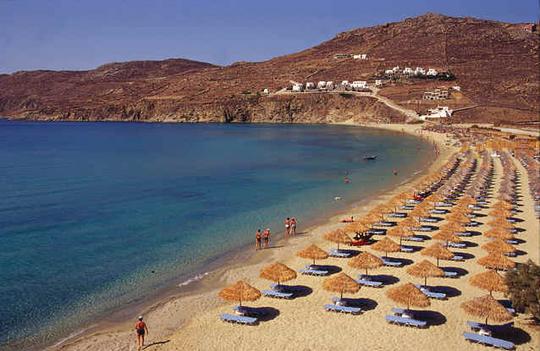
Elia Beach, Mykonos Your
next stop sun will lead you to Mykonos in Greece. Elia Beach Branch several people say that this beach is a favorite of gays. Sometimes referred to as the Super Paradise Beach Gays. In itself, the island of Mykonos is very gay friendly and is gay-friendly destinations to discover.


Black Beach San Diego
Initially, Black Beach was a gay establishment at the beach in San Diego, California. Over time, this corner has become the gay beach town. It shows some homosexuals sometimes run naked into the water and swim. The place is very opened and it entertains well. Beach Black Beach is a little difficult to find, but when you come to your eyes, impossible to leave!


Zipolite Beach, Puerto Angel
Zipolite beach is considered a range of 100% gay. The village of Puerto Angel is located south of Acapulco in Mexico. It is on this beach area dedicated strictly to nudism, which is rather rare in Mexico is still a conservative country. This beach attracts gays comers from Europe and North America.


Telscombe Cliffs, Brighton
Beach Telscombe Cliffs Brighton in England is less known among gay tourists. The gay beach nudism is tolerated by the city, but is not official. Historically, the city of Brighton is an ideal destination for gays and lesbians. It is one of the best choices for the United Kingdom. The gay beach of Brighton can sometimes be crowded, especially not on the premises. This beach is friendly and is conducive to meeting and discussions.


Little Beach, Maui, Hawaii
If your next destination sun you landed in Hawaii, go to Maui to live the experience Beach Little Beach. As its name suggests, is a small beach. It is important not to under-estimated because of its size, because there feast day and night. Little Beach offers an ideal oasis for all gay couples on vacation.


Tamarama Beach, Sydney
The city of Sydney is renowned for its open destination for the LGBT community. If you are looking for the gay beach in Sydney, go to Tamarama Beach. This beach is located in a chic district of the city of Sydney where there are few tourist attractions. The beach is sometimes a victim of its success. This place is quickly becoming very invaded, especially during Mardi Gras. He must choose his moment.


San Antonio Beach, Ibiza
The island of Ibiza is known for its many festivals and openness to gays and lesbians. Rendezvous south of the island Es Cavallet. The beach of San Antonio is probably the best spot for swimming in the sea The beach attracts a large gay clientele with perfect bodies. Not far from the beach you will find some bushes where it is not unusual to see naked men waiting for you.


Playa de la Bassa Rodona, Sitges
Not far from Ibiza, Sitges, also, the gay beach. This significant gay resort attracts tourists who want a little sun. The beach of Playa de la Bassa Rodona is the perfect place to relax. Walk five minutes from the center of Sitges and you'll have toes in the sand. For those looking for a hotel in front of this place, Hotel Accommodation Calipolis is probably closest to swim.


We find thousands of other gay beaches worldwide. One can think of Puerto Vallarta that has not been named. Take time to explore all avenues to make the best choice for your travel destination. Good sunbath.

To read the full article:
www.touristiquementgay.com

http://www.touristiquementgay.com/actualites/tourisme/les-10-meilleures-plages-gays-au-monde?utm_source=MailingList & ; utm_medium = email & utm_campaign = The +10 + best + beaches + gay + in + world

Tuesday, December 28, 2010

Mysore Malliga Vodies

Chronicles of Ancient Galactic

When, towards the middle of the sixth century AD, the Gothic historian Jordanes wrote in the Latin Getica , that is to say, the History of the Goths , he never suspected without doubt that his book would starting point for a comic science fiction published in the 2000s.
And yet it is an entity of this kind that a friend introduced me a few years ago, fully prepared: The Scourge of the gods , Valerie Mangin (the scenario) and Aleksa Gajic ( the drawing), published by Sun between 2000 and 2006. History in a nutshell? The confrontation between the Roman Empire and the Huns led by Attila ... in the distant future, with spaceships and interstellar travel in shambles.

Orbis Galactic Map. Source: site Chronicles of Ancient Galactic .

The end of the Roman Empire: quid, what gives?

The end of the Roman Empire was a period that is often poorly known, even when there is a student in classics (and even when one is in preparation). I must say it has the predictable failure to arrive ... at the end and that we tend to focus more on the best of times, as the end of the Republic or the beginnings of the empire, in short, the first and second centuries around AD those of Cicero and "twelve Caesars ".
When you do things seriously, we of course also examines the earliest times: the founding of Rome (Romulus, Remus and their wolf), royalty and how it is abolished (after the rape of chaste Lucretia by Sextus Tarquinius the infamous son of king Tarquinius Superbus), or the many conquests by which Rome gradually extended his power. And when you want some nice battles, there is always, for example, the Punic Wars that oppose the formidable Carthage to Rome (it holds especially the first two, in the third century BC.).
short, we do not already short of work, then learn how it all over it ends ... So put away the last centuries of Rome in the practice, but rather vague category of "Late Antiquity", a polite and somewhat contemptuous of designating anything that happens once all that was interesting to do has already happened. And yet, the end of antiquity is an exciting time in all areas.

The problem is that it's a big mess (and "bazaar" is a euphemism).

First, we show images of Epinal, a Rome weakened and decadent plundered by barbarians, but this is much more complicated. Over the centuries, the Roman Empire became immense, and he embraced and assimilated a variety of populations.
In 212, Emperor Caracalla granted Roman citizenship to all freemen of the empire who were not yet citizens: it puts an end to so many differences in status (particularly in terms of taxation and military service) who existed so far in the various provinces. This is the great strength of Rome from the Greek cities that giving foreigners the opportunity to fully integrate into the empire, the Greeks, for their part, refuse to grant citizenship in general that at dropper.
short, keep in mind that the opposition "Romans vs. barbarians" is not nearly as clear-cut: in fact, many "barbarians" had become Roman, and vice versa Roman culture was all but sealed the multiple influences local cultures of the provinces.

Image: amethyst intaglio representing Caracalla, 212 AD. JC, Sainte Chapelle, Paris. Source: Wikimedia Commons .

This belief Cloven, let's review the events. You should know that the Roman Empire, partly because of its vastness, eventually divide. The Emperor Diocletian is the first to have the idea with the system of tetrarchy, established in 285: he divided the empire in four of his subordinates, two August themselves assisted by two Caesars, in the hope of facilitate the defense of borders. Unfortunately this does not work well and the succession of Diocletian is particularly troubled because his former assistants are fighting the empire. The unit cost of power from Constantine and lasts until the reign of Theodosius (which definitely makes Christianity the official religion of the empire). But the death of Theodosius in 395, the empire is divided permanently into two: the Western Roman Empire and the Eastern Roman Empire.

When talking about the end of the Roman Empire, it is the Western Roman Empire, which is generally dated to 476 the disappearance, when the last western emperor, Romulus Augustus, was introduced by Odoacer, a Teuton, who commanded the Imperial Guard. This date is also used to mark the end of antiquity and the early Middle Ages. The Eastern Roman Empire, it is still powerful (proof: Odoacer, just after he was proclaimed king, swore allegiance to the emperor of the East) and it lasts much longer, since it becomes then the Byzantine Empire, which does not disappear until the fall of Constantinople was conquered by the Ottomans in 1453. This date is also used to mark the end of ... Middle Ages.

The Scourge of the Gods: the Roman Empire in the Galactic Orbis

If you've read this far, you have looked forward to spacecrafts. One minute it happens!

Now to the episode in the history of Rome, which inspired more precisely The Scourge of the gods. Much is known about Attila the Hun leader, nicknamed "the Scourge of God", by Christian tradition, as opposed to the "City of God" par excellence had become Rome. Less is known of the great adversary of Attila, Flavius Aetius, chief of the legions of the emperor at the time, Valentinian III. Yet Aetius who wins one of the last great Roman military victories, pushing Attila in 451 during the battle known as the Champs Catalaunian, which takes place in Gaul, somewhere in the vicinity of Troyes. The Getica Jordan, I mentioned at the beginning, are one of our sources on this. This battle, which resulted in the nineteenth century all sorts of exaggerations on "civilization vs.. Barbarity", is less known today. In ancient history, Attila died two years later, in 453, not without having made Rome tremble.

Image: Cover the full Scourge of the gods, by Aleksa Gajic. Source: site CAG

In The Scourge of the gods, the story is set in a futuristic Roman Empire, the Galactic Orbis, whose power extends over the entire galaxy ( orbis orbis terrarum or "disc of the earth" in Latin means the world). The main elements of ancient history are transposed to more large scale in most cities of the empire, such as Ravenna (where Valentinian III established his capital), Sirmium (hometown of Aetius) and of course Rome, become planets. Rome is other than Earth, and the seven hills in September .. moons embedded in the earth, where they form huge continents raised. This gives you an idea of the enormous scale of the story!

The cartoon obviously takes liberties with ancient history. Thus the Romans were not Christians, but still honor the pagan gods, and Aetius becomes a woman, Flavia AETI. But the story is far to be a simple transposition space opera battles Attila. First, because qu'Aetia discovered the incarnation of a goddess of war hun, Kerka (fictitious, as far as I know: the true pantheon hun does not look very well known). Then because Attila and Flavia AETI eventually discover a very old book which is nothing but ... the Getica Jordan. Therefore, they realize that there existed another Roman Empire thousands of years earlier, and that their own fate seems doomed to replay that of Attila and Aetius ancient. The two enemies are drawn to ally, and to discover that they are merely pawns in a plot much larger when other forces are at work. For centuries, the Orbis Galactic has turned into a fixed society, where any force for technological innovation is forbidden and nothing seems to have to move, but things are about to change.

First page of Volume 2 of Scourge of the gods. Source: GAC site

I can not say much more without spoiling the fun of reading. But this comic is in my opinion a great success.
She must in large part to the scenario of Valerie Mangin, original and impeccably constructed. Original, because if the theme of the transposition of ancient science fiction is not new (it is likely that the writer grew up when going on television Ulysses 31, the Franco-Japanese anime series Jean Chalopin, which transposes travel Odysseus XXXI century), it was mainly operated in the field of Greek mythology, but less, to my knowledge, Roman history, and also not so developed. Impeccably constructed a scenario, especially because the twists are linked Volume in the Volume over a plot with the ins and outs appear gradually, gradually gaining momentum. We feel that all was prepared entirely in advance, and the consistency of the six-volume history is very clear once play is complete.

But the aspect graph itself is comparable in quality to the script. Illustrations by Aleksa Gajic immediately plunge the reader into the dark and majestic in the galactic Orbis, whose costumes and architecture inspired blend ancient and futuristic elements, and the alliance between the design and realistic colors watercolor gives a very good result. Gajic control moods easily visible colors, lights and contrasts, and the "development box" of the story regularly gives rise to an impressive wide shots which give to see the enormity of this universe, without sacrificing the progression of the plot or leave a feeling of emptiness at the end of a tome.

I really do not have reservations, saying simply that he must love science fiction a bit dark and not be afraid to follow a horde of bloodthirsty Huns. We must also trust the story, including the issues and characters evolve much over the volumes.


Other series: The Last Trojan War and gods

Antiquity is an inspiration to almost inexhaustible, and the concept of the Orbis Galaxy was too good for that it is confined to a single series. Valérie Mangin has therefore created others in the same universe, the whole series forms a ring called "Chronicles of Ancient Galactic. These series are conducted before The Scourge of the gods , which stands at the end of the fictional chronology: they therefore form prequels that tell the origins of Orbis.

The Last Trojan, written by Valérie Mangin and designed by Thierry Demarez and published between 2004 and 2008, tells the story of Aeneas, prince of Troy and survivor of the war after the capture of the city by the Achaeans , to lead the Trojan survivors to another country (another planet) where they can build a new Troy.

Image: Cover of Volume One of the Last Trojans . Source: GAC site

Mangin inspired by either of the story, but Roman myth, that of the Trojan origin of Rome. A myth political and literary, as it was coined by the Romans to raise the prestige of their city, and particularly by the first emperor, Augustus (ist century BC., so), which the poet found the ideal person Virgil, who tells the epic of Aeneas in the Aeneid . After the fall of Troy, Aeneas wanders on the seas and eventually settled in Italy, where his distant descendants, Romulus and Remus founded Rome. The epic is Virgil's imperial propaganda in many ways, including training and a flattering portrait of Aeneas. Indeed, Augustus, grandnephew and adopted son of Julius Caesar, as he belonged to the people Iulia, an old Roman family which had always claimed descent from lulus, the son of Aeneas, more commonly called Ascanius. During his adventures, Aeneas descended to the Underworld, is also predicting the future glory of Rome and the deeds of Augustus ... This bias
policy does not preclude the Aeneid to be a masterpiece of Latin poetry and a source of delight for all lovers of mythology, and one of the best continuations of the Iliad and the Odyssey of Homer, which also draws Valérie Mangin here. In fact, Aeneas, during his journey, meets Lotophagi example, an episode that does not appear in the Aeneid of Virgil, but is directly inspired by the Odyssey .

I can not speak in more detail in this series, so I only read the first two volumes long ago. I remember being less excited than The Scourge of the gods . On the one hand because the drawing of Demar, including its colors, I liked least (but it is true that it is difficult to arrive after Gajic). On the other hand, because the scenario seemed less controlled and seemed to leave a little in every sense ... but we should see what looks like the result, now that the whole series was published. Incidentally, I'm still more ticklish on adaptations of Greek myths, so I'm not really neutral on the subject!

The first volume of a third series, The War of the Gods always written by Mangin and designed by Dean Yazghi this time, was released in February 2010. This time we are in Greek area, because the story is set during the siege of Troy and the main character Odysseus: The series takes place in the "first" antiquity, long before the founding of the Empire Roman Galactic. I have not read this series yet I am content, therefore, to note its existence.

Palaeography futuroscope

Overall, although there is concern that overuse of the vein would be detrimental to the quality of comics (as in other series from Sun, for example Lanfeust Troy), the principle of this series is eminently likeable, especially since the authors do not lose an opportunity to discuss their work on the ancient literature. The site series is well done in this respect: he speaks not only of the universe in the series, but also his sources of inspiration, detailing what items were taken or adapted. Valérie Mangin also includes some volumes of appendices explaining the relationship between its ancient sources and the universe it develops.

Image library in the world of Chronicles of Ancient Galactic . Source: site CAG

But really, what was the point of the writer? As stated on its website , she went through the preparatory classes before taking the competitive School Charters and to obtain, through Charters thesis, a diploma paleographer archivist. She then turned to the cartoon scenario, a choice that other Chartists had done before her, for example Franck Giroud, screenwriter of the Decalogue .
School Charters is school choice for historians of the Middle Ages, because it teaches palaeography, that is to say, the study of medieval manuscripts, as she prepares to contest the heritage, which can work in libraries, museums and national archives (areas unknown to the general public, but extremely interesting). But this school Hideout is THE best Latin scholars as one of the events of the entrance is a free version of Latin dictionary, which is enough to make you scream in horror most people but was not feasible (and it requires to master its vocabulary: useful when you need to read pages written in Latin script in a small weird).
Morality? Interest in ancient and medieval manuscripts never stopped loving science fiction or comic book writer to finish. Not so sterile it, dead languages ...

Monday, December 20, 2010

Message For A Newborn Baby

Jacqueline de Romilly (1913-2010)

" This article or section deals with a recently dead person (December 18, 2010) . (...) The text can change frequently, it may be outdated and may fail to decline. "

These phrases appear on the banner warning that opens in its current state, the article "Jacqueline de Romilly" from the French Wikipedia . Precaution is useful in addressing this kind of topic. We are at work or on vacation, or somewhere in between; the event occurs The news spread, it is learned, it is sad, as always disappears when a great scientist or a great researcher who scored your studies, we remember all sorts of things and we hope others, and we feel the need to say a word, without, prima facie, to have anything very new to tell.

Jacqueline de Romilly in his apartment in 2003.
Source: Liberation . © AFP Alexander Fernandes.

And after all, why talk now? Jacqueline de Romilly died: the event was anything but unpredictable, the situation is set to continue, we can take the time to think. Precipitation is a bad counselor, as well when corrected version at the last minute to make it in other contexts more routine.
Moreover, in the universe university, there are ways to hold on to writing for reassurance. They say an old man dies, a library burns, but issued an old man who dies is a library that remains: what a great console himself a little. On hearing the news, I was torn between guilt any khâgneuse not having read enough books of Romilly, of not knowing his work well enough to pretend to talk, comfort and drive the idea of power discover sooner or later (rather sooner than later, the thesis will not be alone) those of his books that I have not read, and reread the ones I had read long ago. It's like those huge editorial projects that one meets in the library when you start to use the money for the scholarly needs of a master's thesis, for example, the third edition of the Realencyclopädie der classischen Altertumswissenschaft Pauly, begun by Wissowa in 1890 and completed in 1978 (84 volumes when they tell you to learn German ...): The work is so enormous that it exceeds the length of a human life. Most research projects are not so terrifying, but, in general, there is research that precedes by far the birth of the researcher and will continue long after his death. And after all, we are interested in people born and disappeared there are thousands of years ...

There is something to feel very small, but, in short, content: that people can be born, live and die in a given place at a given time, and that other people Elsewhere, much later, continue to consider them to be interested in this that their efforts were to think the human condition, develop a society, face all the problems that arose and to some extent still exist, and through this process of historians and anthropologists, feed their own thinking, thousands of years in the future.
Words of humanities and humanism have been used in many articles published on the occasion of the death (and that's a good thing, because we do not talk enough). In fact, far from reducing the study of Greek antiquity and in general the question (already large) transmission of a language proficiency, think that the approach of humanistic Antique world has the strong sense, as the science they use are the humanities: it's all about the bridge over the centuries and miles, and whereby disparate humans whose lives are at first sight nothing in common, are able to look to each other and recognize themselves as sharing a common condition, observed and constructed all kinds ways depending on the location, times and cultures. Be antiquarian, is like traveling through time and space to meet people who sometimes appear falsely familiar that are quickly radically strange, and yet neither more nor less human, no more or less primitive or civilized than ourselves.

(Photo: A copy of the Realencyclopädie in a library at the University of Göttingen. Source: Wikimedia Commons .)

"For me, I would consider that sufficient 'to these men whose value was translated into action, it also pays homage by acts like the fact that you see today in the official measures taken by them for burial "
(Thucycide, History of the Peloponnesian War , II, 35, Pericles' funeral oration for the dead of the year. Translation: J. Romilly)


Why talk right now, then? First, to give voice and to hear a different perspective than that of the gravediggers, the courtesy not to forget the true beliefs. In 's tribute to the Elysee Jacqueline de Romilly, the Presidency of the Republic, the state institution (which again, fortunately, are in the "long time" beyond the limits particular quinquennium) expressed, as it could only do so in such occasion, and with the dignity appropriate. But it is difficult to recognize in this press voice of the current President, as it is difficult to reconcile this speech with the policy pursued by successive governments.
The opposition between words and deeds is a common method of classical Greek rhetoric: it therefore mobilize our turn, and after this rain-deserved tributes sent to an ardent activist for the protection of literary education, are pushing up 'to obtain satisfaction, asking again and again acts. How much longer will he justify the existence of teaching Latin and Greek from High School? How long will it assert the right of students to study what interests them, and defend that right in front of the pseudo-utilitarianism, which claims to hold the debate by drawing suspicion on the "usefulness" of these materials, better hide the assumptions could not be more objectionable to the "strategy" underlying policy? This policy has beautiful game to budget cuts and closures of positions in the service of an ideology claiming to prepare students for the labor market, but it deprives them of the reality of openness and critical thinking that they are essential to navigate the world as well as "active" than as citizens.

remember it again: this is not to affirm the importance of Latin and Greek as a sort of extra something that would act as the cherry (or humanist) on the cake basic teachings of the school, designed as the only really "useful". Restrict the discussion to the question of the usefulness of Latin and Greek returns to guide the eye from the outset against them. Judged by this yardstick, neither history nor French, nor even the math would be more useful (and also we did not hesitate to challenge the teaching of history secondary). It does not fall into the opposite extreme and claim that everyone should learn Latin and Greek. Let's go to Jacqueline de Romilly, precisely in an article published by Liberation in August 2004 "Elitist, no. What I want instead is that all students who wish may study ancient Greek. And not impose it on everyone. "
What matters is not to close its doors to students on the grounds that" it will avail them nothing. " Do not we see the utter contempt that permeates such a conception of teaching? Do we see not that people who despise the Latin and Greek are claiming that this material "privileged" material "elitist" and take this as a pretext to demand the closure of these teachings, these people are precisely those who seek to make these materials of elite materials, and to reserve a privileged few, by ensuring that as many, convinced of their uselessness, is not interested?

(photo: teacher and student with shelf. Cylix of Douris, Berlin, Altes Museum, F 2285.)

On the need to begin learning the ancient languages in high school, I am sure. If it is possible to quickly acquire a strong background in Latin and Greek in the university who discovered, it assumes a more difficult and nothing, in my opinion, can replace the experience that gives the student attendance extended texts of practice permitted by the version and the study of texts in class from the college or high school. It translates famous pieces of ancient literature, and I welcome all kinds of surveys, which provide much more attractive avenues of readings, each of which just be a valuable culture for further studies.
I could also remember the immediate concern posed by the mastery of these languages and knowledge of these texts for subjects such as French, history, philosophy (and even if one took the trouble, the mathematics and physics), but I like them too preterition to do so. I end on this subject, noting that it is not because one of the most visible walls of the ancient languages just disappear that these languages have no other defenders of all genders and all ages, including many are very young and, I fear, as vigorous as determined.

"The Permanent Secretary and members of the French Academy are sad to announce the death of their colleague M me Jacqueline de Romilly ..."
( News of 20 December on the website of the French Academy)


Who was Jacqueline de Romilly and what it leaves valuable contribution to Greek studies, the papers speak freely, and his page on the French Academy website may indicate you too. It was First, a brilliant student, whose background is impressive (do not worry: you can excel in this field without first, or first, everywhere) but also reflects changes in national education and cultural institutions: "Life Jacqueline de Romilly (...) is a kind of track record of victories of women in the cultural world of the second half of the twentieth century ", says Jean d'Ormesson today in an article in Le Figaro . To the extent that another section of Figaro awarded him the same day itself, something she would probably not appreciated, a title she has not, the first woman admitted to the competition ENS Ulm, information which, according to my documentation is false, the first admitted to the competition of Ulm who joined the school from 1910 (Jean-Francois Sirinelli (ed.), Ecole Normale Superieure. The book Bicentennial , PUF, 1994, p. 106, note 2), while Jacqueline de Romilly, born three years later, there came in 1933.
A pioneer period anyway, at a time when the SLA was essentially a male world, and long before the merger of the Ecole Normale Superieure de Sevres girls and ENS Ulm in 1985. And a route, incidentally, entirely based the possibilities offered by the National Education College Molière at the College de France and the Academy. Before you sigh at this face of good student so brilliant that it can seem overwhelming, it does not hurt to remember that it is "also" the role of public education that form excellent researchers in all fields.
The route of Jacqueline de Romilly is also representative of that of girls - and women - usually in higher education: after having long been excluded, they will now surpass boys in terms of results, and are majority in the humanities.
is a little surprising to see the French Academy, which offers all sorts of things yet, call Jacqueline de Romilly of "Brother". Even without being a fanatic of the feminization grammar at all costs, like SRS posthumously seems a bit strong. These snakes would they confused with Tiresias? Or have they given up writing "Sister" not knowing how to type an "i" in HTML (& # 339; without the spaces)? If "Sister" would not do them, they lacked the vocabulary or taste for variatio point finding nothing other than "colleague"? I can not bring myself to believe.

"... a pulsed light sources of a high civilization - Greek civilization" ( statement from the Elysee tribute to Jacqueline de Romilly)

Jacqueline de Romilly has mainly worked on classical Greece (that of the fifth and fourth centuries BC) and the literature of that era. She had dedicated her thesis to Thucydides and gave a clear and rigorous translation of his History of the Peloponnesian War to the Collection Universities France (and a single edition in translation, accompanied by a "dictionary Thucydides," in Robert Laffont). For anyone who has ever dealt with Thucydides' version, especially the speeches in Thucydides, whose style is frighteningly twisted is in itself a claim to fame. But outside this ktèma eis aei (this "treasure forever" in the words of Thucydides about his work in I, 22), she has published many books on classical Greece, literary studies and historical, as well as books addressed to a wider audience, where she defends the teaching of letters and ancient languages.

(Photo: Bust of Thucydides, Royal Ontario Museum. Source: Wikimedia Commons .)

While it is customary to ignore the faults of the dead man to raise his eulogy, I will not do here, not least because its merits as easily outweigh the defects in question. If we can blame something on the approach of Jacqueline de Romilly (I say this because I am far from alone) is to have embodied a vision of ancient Greece still strongly influenced by the myth the "Greek miracle", this design reduces Greece Antique democratic Athens of the fifth century, which raises the fully armed like Athena from Zeus's skull in the adorning of all sizes. If that is attractive
this mirage, historians have had it cast off. Greece was far from being reduced to Athens, even if the Athenians would not have seen any objection. Thucydides, for all its rigor, was "not a colleague," as recalled by the historian Nicole Loraux. And Greek civilization as a whole can not be studied independently of the rest of the ancient world, including the ancient Near East. Is that ancient Greece, which history has one of the pillars of what is called a choice of European or Western culture, was terribly Eastern. And today, to speak of Greece, with or without mention of the ancient Near East can no longer be an innocent choice.
It is not, of course, to acknowledge Jacqueline de Romilly of anything: among many other possible reasons, she chose to specialize in the study of some subjects and a discrete period and it is not about questioning the quality of his work (that would be swollen!). There is more excuse for me to take this issue to draw attention to an issue of image and ideas received. Greece does more for the general public, being a sort of miracle marble born in the fifth century BC with the glare of a flash in an empty sky. And if I freely admit I, too, my admiration for this "civilization" (from the dangerous theories of Huntington, it should no longer use that word without quotation marks), I can not agree to read it praised as "very high" without me request "and the other, so they were not so high?" Do

see there is no excess in the cutting of hairs. What is at stake here was already in the nineteenth century, when the study of myths has made in a scientific discipline. As Marcel Detienne explained in Inventing mythology, the first mythologists had so much trouble admitting that the Greeks could believe in fairy tales - myths - as absurd as those which the early anthropologists discovered while around the world among peoples without writing, and even, in the words of Max Müller, "attributed to their gods of things that would thrill the most savage Indians." In a time when the humanities as essential as anthropology and linguistics were still in their infancy, it took much effort before an open mind we do recognize that the Greeks were not superior to "primitive", that primitive were not inferior to others, and besides, Westerners were not particularly savvy with the rest of humans. The same
Marcel Detienne also remember at the beginning of Apollo knife in hand, that this god, which readily depicts all reason and philosophy, which summarizes all the grandeur of antiquity with a capital A, is also the god who presides over the bloody sacrifices, the "butcher boy" who work in kitchens, even the god of violent, criminal rained plague on the Achaeans at the beginning of the Iliad (but I will not be too much on this last point, for fear of reactivating the other false image of the pagan gods, the one we inherited from Christianity and that boils down to enjoy their aspect of "Too Human" for better change tyrants libidinous).
short, we do not remember too how he must be wary of false familiarity of antiquity, whether Greek, Roman or Greco-Roman. It is in this false familiarity breed conventional wisdom. And if Jacqueline de Romilly herself knew what she was doing by confining much of his research at classical Athens, the image that remains of his work and circulating right now to the general public through tributes, articles and reports should not summarize the approach to ancient Greece that the deceased was a Hellenist.

Everything is in the image and the recovery can be made: at a time when researchers, guided by their findings and results of their research, are turning increasingly to the east when they study in Greece, Athens the image of a fiercely independent, on her own, the West can and radically alien to the barbaric boasted to face can become a convenient instrument in the political arena.
After all, being antiquarian today, it also wonder by what miracle the same political discourse can mobilize both the image of Epinal Islamophobic Muslims slaughtering sheep in a parking lot and another image of Epinal Greek philosophers chatting on the steps of immaculate temples, even though we routinely slaughtered sheep in front of these temples and it is hardly more than the creed East of Pythagoras ...


(sacrifice of a young boar. Cylix Attic red-figure painter Epidromos. Source: Wikimedia Commons .) Let us remain vigilant

on the use made of the classical period and the image (largely built by Athenian authors themselves) radiation in Athens, and do not summarize an otherwise ancient Greece broader, extending from the second millennium BC to the sixth or seventh century and includes many other exciting cities and regions that the only Athens, many other genres and art worthy interest that the story thucydidéenne or Greek tragedy. But these nuances and these precautions, it is time to greet her as she deserves the Hellenistic researcher, teacher and activist that was Jacqueline de Romilly, and the extensive work it leaves behind it, and we have not finished reading and rereading.